Updated September 13, 2026. Reviewed for accuracy against U.S. federal government sources including the FDA, CDC, EPA, USGS, and FTC.
What Is the Quick Answer?
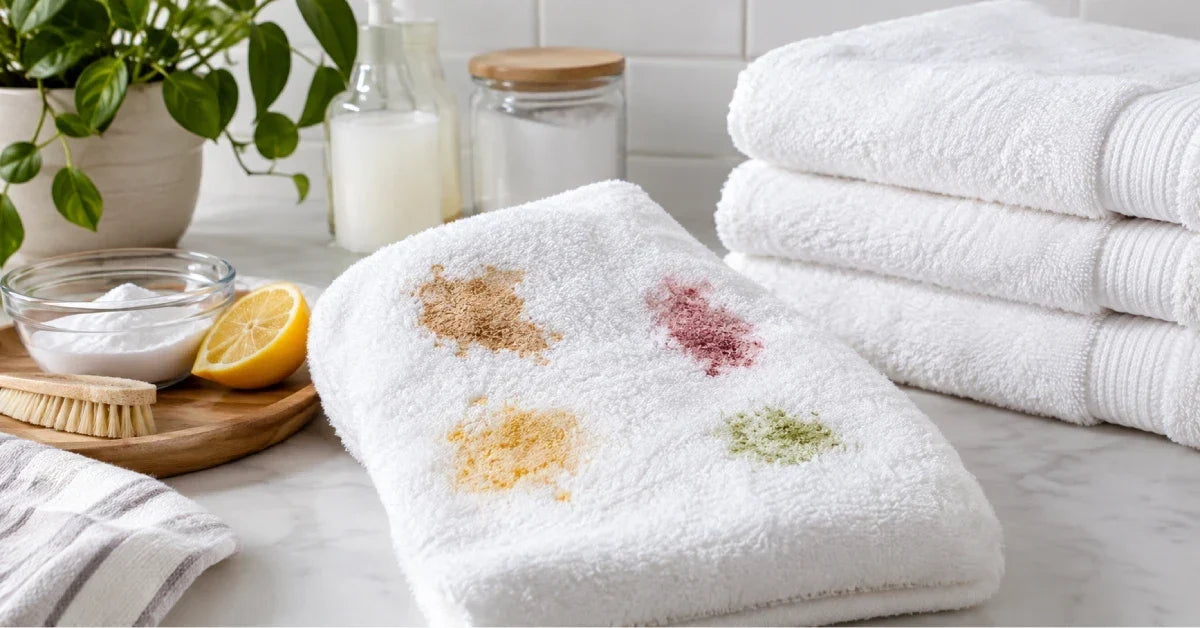
Most white towel discoloration falls into five categories, and each one needs a different fix. Makeup, self tanner, and everyday dinginess almost always come out with dish soap and an oxygen bleach or hydrogen peroxide soak, but orange or peach blotches caused by benzoyl peroxide acne products are permanent and cannot be removed by any product on the market, according to peer reviewed dermatology research and the U.S. Food and Drug Administration.
This guide covers the exact cause, fix, and time needed for every common white towel stain, explains why hot chlorine bleach is not always the safest choice for cotton fiber, and links directly to the government agencies whose data backs each claim. Use the quick reference table below to jump straight to your stain, or read the full sections for step by step instructions.
| Stain Type | Likely Cause | What Actually Works | Time Needed |
|---|---|---|---|
| Orange or peach blotches | Benzoyl peroxide from acne cream or wash | Nothing. The dye is chemically stripped, not stained. | Not applicable |
| Grey or tan smears | Liquid foundation, concealer, or waterproof mascara | Dish soap to break down oil, then an oxygen bleach soak | 15 minutes plus a 2 to 6 hour soak |
| Dark tan or brown streaks | Self tanner or bronzer (DHA) | Cold water flush first, then hydrogen peroxide or oxygen bleach | 2 hours minimum |
| Overall yellowing or dinginess | Hard water minerals, body oil, or detergent buildup | Citric acid or oxygen bleach soak, not chlorine bleach | 30 to 60 minutes |
What Causes Orange Stains on White Towels?
Orange, peach, or light tan blotches on a white towel are almost always caused by benzoyl peroxide, an active ingredient in acne washes, spot creams, and prescription gels, not by an external stain. Benzoyl peroxide is a strong oxidizing agent, and residue left on skin after washing your face transfers to the towel and reacts with the fabric's dye or optical brighteners.
The U.S. National Library of Medicine describes benzoyl peroxide's bleaching quality as its most common side effect, noting it can discolor colored fabric and even bleach hair. Read the full clinical summary from the National Institutes of Health (StatPearls).
A controlled study published in the Journal of the American Academy of Dermatology tested a 10 percent benzoyl peroxide gel against six fabric types. Cotton and cotton blend swatches stayed visibly discolored after washing, even though the gel had only touched the fabric for 8 hours, while synthetic fabrics resisted the effect far better. View the study summary.
Can Benzoyl Peroxide Stains Actually Be Removed From Towels?
No. Benzoyl peroxide marks are not stains in the normal sense, they are a permanent chemical bleaching reaction, so no amount of soaking, scrubbing, or stain remover will bring the color back. The compound oxidizes and strips the dye or brightener from the cotton fiber itself, which is a one way chemical change rather than an added pigment sitting on top of the fabric.
When the FDA finalized its 2011 rule on over the counter acne products, it specifically required new consumer warnings stating that benzoyl peroxide can bleach hair or dye fabric, which confirms this is an established, regulator recognized effect rather than a rare complaint. Read FDA guidance on tanning and cosmetic ingredient regulation which covers how the agency handles color additive safety more broadly.
How Can You Prevent Benzoyl Peroxide From Ruining Your Towels?
Prevention is the only real solution, so the goal is keeping the chemical off colored or brightened cotton in the first place. Four habits make the biggest difference:
- Switch to plain white bath linens without dyed borders or trim, since there is no dye left to strip once the towel is pure white cotton.
- Keep one dark, inexpensive washcloth set aside strictly for drying off after applying acne treatment, separate from your good towels.
- Rinse your hands and face with water for a full 20 seconds after applying any benzoyl peroxide product, so residue does not transfer to fabric on contact.
- Look for towels labeled resistant to benzoyl peroxide, which use vat dyed synthetic blends engineered to resist this specific oxidation.
If you are rebuilding a towel set around this problem, a set of plain white Turkish towels with no colored trim removes the risk entirely, and a dedicated face towel set kept just for skincare routines protects your good bath towels from any transfer.
How Do You Get Makeup Stains Out of White Towels?
Makeup stains respond well to a two stage approach: dissolve the oil base first, then lift the leftover pigment with an oxygen soak. Foundation, concealer, and waterproof mascara all combine oily binders with concentrated pigment, so treating only one half of that combination usually leaves a faint shadow behind.
Stage One: Dissolve the Oil Base
- Scrape away any dried product with a dull butter knife or spoon edge. Avoid rubbing, which pushes pigment deeper into the loops.
- Apply a few drops of clear, degreasing dish soap directly onto the dry stain.
- Work the soap into the fibers gently with a soft bristle toothbrush and let it sit for 10 to 15 minutes.
- Flush from the back of the towel forward under warm, high pressure water to push the loosened oil out of the pile.
Stage Two: Lift the Pigment
- Fill a basin with hot water and dissolve one full scoop of sodium percarbonate, commonly sold as oxygen bleach powder.
- Submerge the towel fully and soak for 2 to 6 hours, or overnight for stubborn waterproof mascara.
- Machine wash on a standard hot cycle using a heavy duty detergent.
For a lighter touch on delicate or waterproof eye makeup, micellar water on a cotton pad can lift pigment before you ever reach for soap, which is worth trying first if the mark is small.
How Do You Get Self Tanner Out of White Towels?
Flush a fresh self tanner stain with cold water immediately, since warm or hot water accelerates the chemical reaction that sets the color permanently into cotton. Self tanners work through dihydroxyacetone, commonly called DHA, a sugar compound the FDA has approved as a color additive that reacts with amino acids in skin, and in fabric fibers, to form brown pigments called melanoidins.
The FDA notes that DHA is restricted to external application and confirms it is the only sunless tanning active ingredient the agency currently allows in over the counter products. Read the FDA's official page on sunless tanners and bronzers for the full regulatory background, and see the agency's separate safety guidance on tanning products for handling precautions.
- Flush the back of the stain under cold running water immediately, until the rinse water runs clear. Never use warm water at this stage.
- Apply concentrated liquid detergent or grease cutting dish soap directly to the damp area and scrub gently to break down the oil and silicone carriers.
- Soak the area in a 1 to 1 solution of 3 percent hydrogen peroxide and cold water, or soak the full towel in an oxygen bleach bath for at least 2 hours.
- Machine wash on a heavy duty cycle with detergent plus an oxygen bleach additive, and inspect the towel before drying. Repeat the soak if any brown mark remains.
Does Bleach Damage Cotton Towels?
Yes, repeated use of liquid chlorine bleach breaks down cotton's natural cellulose fibers over time, leading to thinning, fraying, and shedding, even though it works well as a short term sanitizer. Chlorine bleach can also react with trace iron in tap water and certain fabric finishes, which is a common reason white towels slowly turn a dingy yellow rather than staying bright.
The CDC also warns that household chlorine bleach can release irritating chlorine gas if it is mixed with other cleaning products, so it should always be used alone, in a well ventilated space, and never combined with ammonia based cleaners. Read the CDC's chlorine chemical fact sheet for the full safety guidance.
For routine hygiene, the CDC's infection control guidelines recommend hot water washing at a minimum of 160 degrees Fahrenheit, or 71 degrees Celsius, for at least 25 minutes to reliably reduce microorganisms in laundry, a benchmark used across healthcare laundering programs. See the CDC's guidelines for laundry and bedding.
What Is the Difference Between Chlorine Bleach and Oxygen Bleach?
Oxygen bleach, or sodium percarbonate, is generally the safer everyday choice because it whitens and lifts organic stains without breaking down cotton fiber the way chlorine bleach can with frequent use. Chlorine bleach still has a place for occasional deep sanitizing of pure white loads, but it is restricted to white only fabric and carries a higher long run yellowing risk from mineral reactions.
| Feature | Liquid Chlorine Bleach | Oxygen Bleach (Sodium Percarbonate) |
|---|---|---|
| Active chemical | Sodium hypochlorite | Sodium carbonate plus hydrogen peroxide |
| Effect on cotton fiber | Weakens cellulose fiber with repeated use | Gentle on natural cotton pile |
| Yellowing risk over time | Higher, especially with iron in tap water | Lower, tends to restore brightness |
| Color safety | White items only | Safe on most whites and colors |
| Best use | Occasional sanitizing of pure white loads | Routine whitening and stain lifting |
Why Do White Towels Turn Yellow, and How Do You Fix Hard Water Stains?
White towels usually turn yellow from a combination of body oil buildup, leftover detergent residue, and mineral deposits from hard water, particularly dissolved calcium, magnesium, and iron. The U.S. Geological Survey defines water hardness as the amount of dissolved calcium and magnesium in a water supply, and notes that hard water is especially common across the east central and western United States. Read the USGS explanation of water hardness.
To check whether hard water is contributing to your towel's yellowing, request your local water utility's Consumer Confidence Report, an annual water quality disclosure required under the EPA's Safe Drinking Water Act program. Find guidance on Consumer Confidence Reports from the EPA.
To treat rust colored or yellow hard water staining, soak the towel in warm water mixed with about 2 tablespoons of citric acid powder, or use a commercial rust remover made for fabric. Avoid chlorine bleach on rust or iron stains specifically, since it oxidizes the iron and can lock the discoloration in permanently rather than lifting it.
How Do You Identify an Unknown Towel Stain Fast?
Match the color and pattern of the mark against the table below before you treat it, since applying the wrong agent, such as hot water on a fresh self tanner stain, can set a stain that would otherwise have come out easily.
| Appearance | Likely Cause | First Move | Treatment | Outcome |
|---|---|---|---|---|
| Orange or pink splotches | Benzoyl peroxide | Stop, do not treat | None available | Permanent, retire the towel to gym or garage use |
| Dark tan or brown lines | Self tanner or bronzer | Cold water rinse, never warm | Dish soap, then oxygen bleach soak | Usually fades within one to two washes |
| Grey smeared circles | Liquid foundation or concealer | Scrape excess, then dish soap | Hot wash with heavy duty detergent | Usually clears in one treat and wash cycle |
| Black or dark grey flecks | Waterproof mascara | Dab with micellar water | Dish soap pretreatment, then oxygen soak | Usually clears within a few hours of soaking |
| Overall grey dullness | Detergent or body soil buildup | Skip soap entirely | Wash with white vinegar, then a baking soda cycle | Brightens within one reset cycle |
| Yellowish patchiness | Hard water minerals or iron | Avoid chlorine bleach | Citric acid or a labeled rust remover soak | Improves gradually over repeated treatments |
What Water Temperature Should You Use to Wash White Towels?
Wash everyday white towels in hot water, generally around 140 degrees Fahrenheit or 60 degrees Celsius, with a heavy duty detergent to dissolve body oil and reduce bacteria, unless the care label says otherwise. Always check the label first, since the FTC's Care Labeling Rule requires manufacturers to disclose the maximum safe washing temperature and any bleaching restrictions for the specific fabric blend.
Review the FTC's guidance on complying with the Care Labeling Rule for the full definitions of washing, drying, and bleaching terms used on the label.
For delicate organic cotton or towels with elastic trim or embroidery, use warm water paired with an oxygen bleach additive instead of full heat, since high heat alone can be as damaging to fiber structure as harsh chemicals over time.
How Do You Stop Towels From Staining in the First Place?
- Keep a dedicated dark washcloth just for skincare and acne treatment, separate from your bath towels.
- Use disposable micellar wipes to remove makeup before you dry your face on a white towel.
- Rinse cold immediately on any fresh self tanner or bronzer contact, before it has a chance to set.
- Replace liquid chlorine bleach with oxygen bleach for routine washing to protect cotton fiber over time.
- Test your water hardness through your utility's Consumer Confidence Report and add a citric acid rinse if levels are high.
- Always check the care label before applying heat or bleach, since fiber blends vary in how much they can tolerate.
Which Towels Resist Stains and Discoloration Best?
Denser, tightly woven towels tend to hold onto oil and product longer, while a looser, long staple weave such as Turkish cotton releases residue more easily and dries faster between uses, which limits the damp window that odor causing bacteria and mineral buildup both need. Pure white towels without dyed trim also remove the benzoyl peroxide stripping risk entirely, since there is no color left to strip.
If you are shopping for a replacement set, browse plain white Turkish towels for everyday bath use, check a full towel set if you need to replace bath, hand, and face sizes together, or see the current top selling towels and robes for the most popular fiber and weave choices.
What Should You Read Next?
These related guides cover the towel care topics that come up most often alongside stain removal:
- How to wash towels with vinegar and baking soda, for stripping detergent buildup and restoring absorbency without harsh chemicals.
- How to remove that stubborn mildew smell from your towels for good, for the moisture and odor problem that often shows up alongside staining.
- The best bath towels for sensitive skin, for choosing a fiber that holds up to frequent washing and treatment.
- How to make towels soft again, for restoring loft and softness once stains are gone.
- Turkish versus Egyptian cotton, for comparing fiber types before you replace a stained towel set.
- What is GSM in towels, for understanding towel weight and density when shopping for stain resistant options.
Final Recommendations
- If the mark is orange or peach and appeared after an acne product, stop treating it. It will not come out, so reserve that towel for gym or garage use going forward.
- If the mark is makeup, treat the oil first with dish soap, then soak in oxygen bleach for at least 2 hours before washing hot.
- If the mark is self tanner, flush cold immediately. Warm water at any point in the process will set the stain permanently.
- If your towels look dingy overall, suspect hard water or detergent buildup before reaching for chlorine bleach, and check your water utility's Consumer Confidence Report.
- For routine care, default to oxygen bleach over chlorine bleach to protect cotton fiber over the life of the towel, and always confirm temperature limits on the care label first.
Sources
Government and institutional sources referenced in this guide:
- FDA, Sunless Tanners and Bronzers
- FDA, Tanning Products Safety Guidance
- National Institutes of Health, National Library of Medicine, Benzoyl Peroxide (StatPearls)
- CDC, Laundry and Bedding, Infection Control Guidelines
- CDC, Chlorine Chemical Fact Sheet
- USGS, Hardness of Water
- EPA, Consumer Confidence Reports
- FTC, Clothes Captioning, Complying with the Care Labeling Rule
Additional clinical source: Journal of the American Academy of Dermatology, benzoyl peroxide fabric staining study.