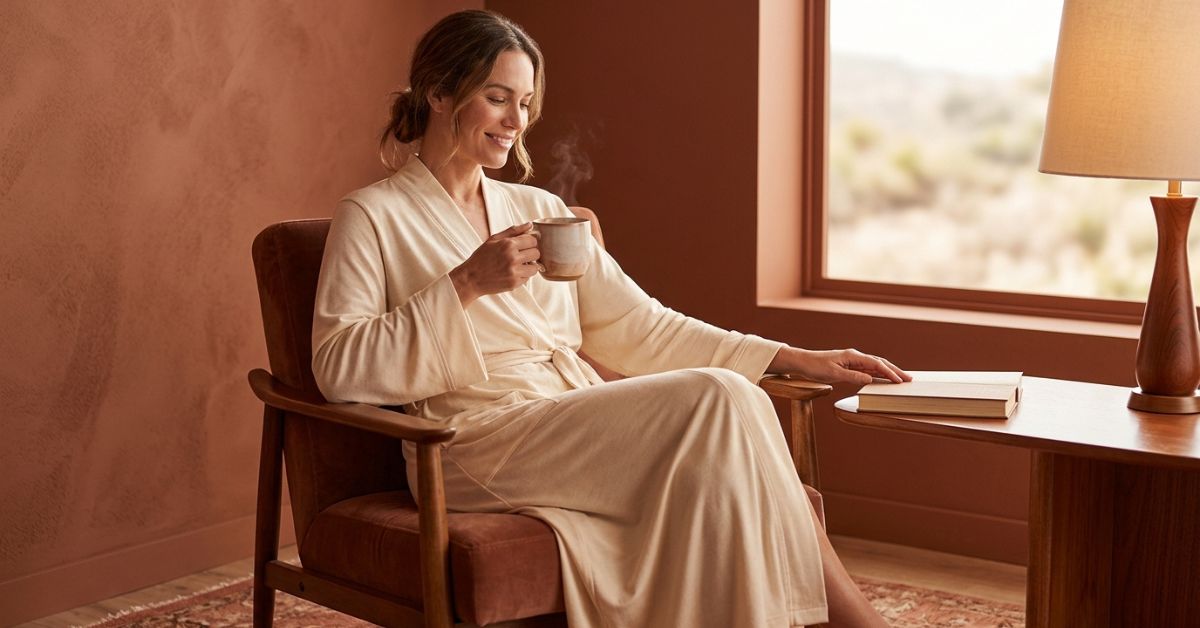
There is a huge difference between a robe that feels like a heavy blanket after a cold shower and one that leaves you sweating ten minutes after putting it on. Whether you are stepping out of the bath, lounging on a lazy Sunday morning, or looking for something light for summer, choosing the right material makes all the difference.
At ThirstyTowels, we spend a lot of time thinking about fiber, weave, and weight, because those three details decide whether a robe becomes a daily favorite or ends up at the back of a closet. With dozens of options, from classic organic cotton to ultra plush microfiber, finding the best robe material really comes down to three key factors: absorbency, breathability, and warmth.
1. Why Robe Material Matters More Than Design
When shopping for outerwear or casual clothes, fit and style usually take top priority. But with loungewear, fabric composition controls most of your comfort experience.
The wrong fabric can trap body heat, irritate sensitive skin, or stay damp for hours after a shower. High quality natural fibers regulate your body temperature and wick moisture, whereas cheap synthetic knits trap humidity against your skin. The table below is a quick reference for matching a goal to a fiber family before you read the full breakdown.
| If your priority is... | Look for... | Typical fiber family |
|---|---|---|
| Absorbing water fast | Uncut looped pile | Cotton terry cloth |
| Staying lightweight and cool | Open, airy weave | Linen or lawn cotton |
| Maximum plushness and warmth | Dense pile, brushed finish | Fleece or microfiber |
| Regulating temperature year round | Fine, smooth fiber | Bamboo viscose or silk |
2. Long Staple Cotton: The Undisputed Classic
When people picture a high end luxury hotel robe, they are almost always thinking of long staple cotton. Cotton remains the gold standard for bathrobe fabric because its natural fibers are naturally soft, breathable, and highly absorbent. According to the Federal Trade Commission's Textile Rules, any garment labeled as cotton, or as a cotton blend, must accurately disclose fiber content, which is one reason it pays to check the label before you buy.
- Turkish Cotton: Known for long, dense fibers that get softer with every wash. It hits the perfect balance between absorbency and drying speed, making it ideal for bathrobes.
- Egyptian Cotton: Offers maximum absorbency and a heavier, denser feel. It takes slightly longer to dry than Turkish cotton, but offers unmatched durability.
- Pima or Supima Cotton: A plush, durable option grown primarily in the United States, known for rich texture and resistance to pilling.
Cotton fiber length and quality are graded in the United States by the USDA Agricultural Marketing Service Cotton Program, which classifies raw cotton for length, strength, and color before it ever reaches a mill. That grading system is part of why Turkish and Egyptian cottons carry their reputation for long fibers and durability.
If you want a deeper side by side comparison, our full breakdown of Turkish versus Egyptian cotton walks through fiber length, softness over time, and price so you can decide which one fits your routine.
Key advantage: Cotton is generally hypoallergenic and easy to care for, so you can wash it without worrying about special delicate settings.
3. Terry Cloth vs Waffle Weave: Choosing Your Cotton Structure
Even within one hundred percent cotton robes, the weave type completely changes how the fabric performs. Terry cloth relies on uncut loops that catch and hold water, while a waffle, or honeycomb, weave forms a three dimensional grid that traps warm air instead of soaking it up.
| Feature | Terry Cloth | Waffle Weave |
|---|---|---|
| Primary use | After shower drying | Spa lounging, summer wear |
| Absorbency | Exceptional (high GSM) | Moderate |
| Weight | Heavy to very heavy | Light to medium |
| Drying time | Slower | Very fast |
| Texture | Plush, towel like | Crisp, textured grid |
If your primary goal is to dry off fast right after a bath or shower, terry cloth is the winner. If you want a lightweight, breathable layer to wear over pajamas while drinking coffee, waffle weave is much more comfortable. You can browse our full range of terry bathrobes to compare weights and colors side by side.
4. Bamboo Viscose: The Ultimate Moisture Wicking and Thermal Choice
Bamboo derived fabrics, sold as viscose or rayon from bamboo, have become top tier options in premium loungewear, and for good reason. Bamboo fibers feature a naturally porous microscopic structure. This allows the fabric to pull moisture away from the skin faster than traditional cotton, while allowing heat to escape during warmer months.
- Silky texture: Feels exceptionally smooth against the skin without the slippery feel of synthetic satin.
- Thermal regulation: Keeps you noticeably cool in summer and comfortable indoors during winter.
- Sensitive skin friendly: Smooth, round fibers mean minimal friction, which matters for anyone managing eczema or reactive skin.
Eczema, also called atopic dermatitis, is a common condition in which the skin barrier is easily irritated by rough or scratchy textures. The National Institute of Arthritis and Musculoskeletal and Skin Diseases notes that soft, breathable, non irritating fabric is one of the simplest ways to reduce flare ups, which is exactly why smooth fibers like bamboo and long staple cotton are recommended for sensitive skin.
For a closer look at fabric choices for reactive or easily irritated skin, see our guide to the best bath towels for sensitive skin, which applies the same fiber principles covered here.
5. Linen Robes: The Breathable Summer Essential
Derived from the flax plant, linen is one of the oldest and most breathable textile materials in existence. Unlike heavy plush fabrics, a linen robe provides light coverage without adding unnecessary heat. It has high natural air permeability and dries faster than almost any other natural fiber.
- The look: Relaxed, slightly textured, and effortlessly elegant.
- The feel: Starts slightly crisp, but transforms into an incredibly soft, airy garment over time.
- Best for: Hot climates, summer morning routines, or humid bathroom environments.
6. Microfiber and Polyester Fleece: Maximum Warmth and Plushness
For crisp winter mornings where insulation is your top priority, synthetic materials like polyester fleece, plush microfiber, or sherpa lead the market. These synthetic robe materials are engineered to trap air pockets close to the body, creating an instant barrier against cold drafts.
Because these fibers are synthetic, they also fall under federal flammability rules. The Consumer Product Safety Commission's Flammable Fabrics Act sets the flammability standards that all clothing textiles, including fleece and microfiber robes sold in the United States, must meet, so reputable manufacturers test their fabric against this standard before it reaches shelves.
Pros: Incredibly soft, budget friendly, lightweight for its thickness, and holds heat extremely well.
Cons: Very low absorbency. Do not put on a fleece robe while damp, since it will trap moisture against your skin and feel clammy.
7. Silk vs Satin: Pure Elegance and Friction Reduction
If you care most about aesthetics, smooth skin friction, and hair protection, liquid drape fabrics like silk and satin are top contenders.
- Mulberry silk: A natural protein fiber that contains natural amino acids. Silk retains your skin's natural moisture, reduces hair frizz, and regulates temperature naturally. It generally requires careful hand washing or dry cleaning.
- Polyester satin: Replicates the glossy look and smooth drape of silk at a fraction of the cost. While easy to machine wash, it lacks silk's natural breathability.
Care labels matter more than most shoppers realize. Under the FTC Care Labeling Rule, manufacturers must permanently attach instructions telling you how to wash, dry, bleach, and iron the garment, which is especially important for delicate fibers like silk that can be damaged by the wrong cycle.
8. Fabric Weight Explained: Understanding GSM
When reading robe specifications, you will often see a number followed by GSM, which stands for grams per square meter. GSM measures the density and weight of the fabric.
| GSM range | What it means |
|---|---|
| 200 to 300 GSM (lightweight) | Waffle weave, linen, and silk. Perfect for warm weather, travel, and casual summer morning wear. |
| 350 to 450 GSM (medium weight) | Standard bamboo, light terry, and medium cotton. Great for year round indoor use. |
| 500 GSM and above (heavyweight) | High end hotel plush terry cloth and heavy fleece. Designed for maximum warmth and after shower drying power. |
9. Common Robe Material Problems and How to Solve Them
| Problem | Likely cause | Solution |
|---|---|---|
| Dampness and musty smells | High GSM terry cloth without airflow | Switch to waffle weave or linen, or hang the robe somewhere ventilated |
| Overheating indoors | Synthetic fleece | Choose bamboo viscose or cotton instead |
| Fabric pilling or coarseness | Short staple cotton | Opt for long staple or Pima cotton |
Issue: The robe stays damp for a long time. Fix: High density terry cloth needs good airflow to dry. Switch to a waffle weave cotton or linen robe that dries quickly on a standard hook.
Issue: Sweat builds up after ten minutes. Fix: You are likely wearing one hundred percent polyester fleece in an environment that is too warm. Switch to organic cotton or bamboo viscose to let your skin breathe.
Issue: Rough texture after washing. Fix: Excess detergent builds up in loop fibers over time. Skip fabric softeners, which coat fibers in a water repellent wax, and add half a cup of distilled white vinegar to the rinse cycle to restore softness. If you would rather avoid conventional detergent buildup altogether, the EPA Safer Choice program maintains a list of certified cleaning products that rinse cleanly and are gentler on natural fibers.
10. How to Choose the Right Robe Material for Your Needs
To pick the ideal bathrobe fabric, match your primary daily use case to the table below.
| Primary goal | Recommended material | Alternative option |
|---|---|---|
| After shower or bathing | Turkish cotton terry cloth | Pima cotton waffle |
| Hot summer days | One hundred percent French linen | Bamboo viscose |
| Freezing winters | Plush microfiber or fleece | Heavyweight Egyptian cotton |
| Luxury and evening lounging | Mulberry silk | High thread count satin |
| Travel and easy packing | Lightweight cotton waffle | Thin linen |
Recommendation: If you only own one robe, choose a medium weight, long staple cotton terry robe between 400 and 500 GSM. It absorbs well, dries in a reasonable time, and works comfortably across most seasons. Add a lightweight waffle or linen robe later for summer, and a fleece robe for cold climates, rather than trying to find one fabric that does everything perfectly.
11. Choosing Safe Fabric for a Children's Robe
Children's sleepwear and robes are treated differently from adult clothing under federal law, because loose fitting fabric near young children carries a higher fire risk. The eCFR Children's Sleepwear Flammability Standard sets specific flammability requirements for sleepwear sized above nine months, which is why many children's robes and cover ups are made from tightly woven or snug fitting fabric rather than the loose, plush weaves common in adult robes.
When shopping for a child, look for soft, breathable cotton or cotton blend fabric with a snug fit rather than a loose, trailing hem, and always check the care label. Our kids bathrobe collection is built around soft, absorbent cotton terry that is sized to fit properly rather than drag on the floor.
12. Care and Maintenance Tips to Preserve Fabric Softness
- Skip the fabric softener. Liquid softeners coat natural fibers with a silicone layer, which drastically reduces their ability to absorb water.
- Wash in cool to warm water. High heat damages delicate fibers, breaking down bamboo and shrinking linen or cotton.
- Use low heat in the dryer. Tumble dry on low heat to keep long staple cotton loops fluffy without scorching the tips.
- Avoid overloading the machine. Robes need space to rinse thoroughly. Overcrowding leaves detergent residue trapped in thick weaves.
13. Final Verdict: Which Robe Material Wins?
There is no single best material for everyone. The ideal fabric depends entirely on your climate and lifestyle.
- Overall best for after shower use: Turkish cotton terry, since it is absorbent, durable, and gets softer over time.
- Overall best for daily lounging: Bamboo viscose, since it is ultra soft, temperature regulating, and skin friendly.
- Best for warm weather: Linen or waffle weave cotton, since both are breathable, lightweight, and quick drying.