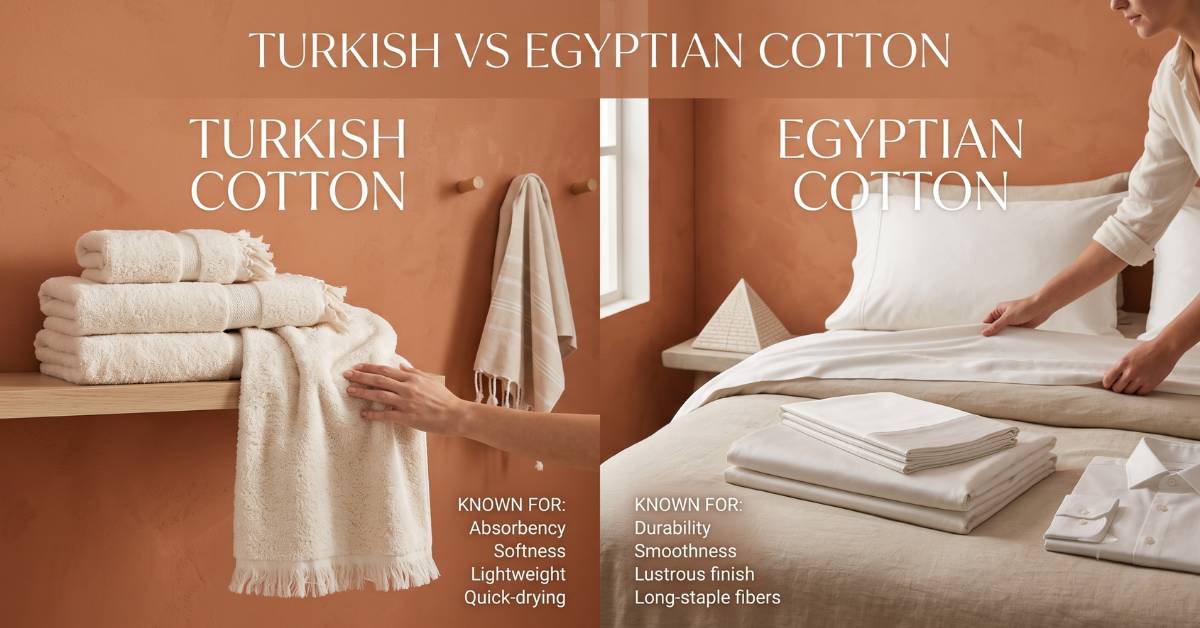
Stepping out of a warm shower into a scratchy, damp towel is a quick way to ruin a relaxing morning. Similarly, tossing and turning in stiff, unbreathable sheets can destroy a good night's sleep. When you decide to upgrade your home linens, you are immediately confronted with two heavyweights in the luxury textile world: Turkish vs Egyptian cotton.
Both command a premium price. Both are plastered across the packaging of high-end home decor brands. But are they just marketing buzzwords, or is there a genuine scientific difference between the two?
The short answer is yes — the differences in their molecular structure, geographic origins, and moisture-wicking capabilities dictate exactly how they should be used in your home. If you choose the wrong one for your climate or lifestyle, you might end up with towels that constantly smell musty or sheets that sleep too hot. If odor is already a problem in your linen closet, our guide on how to Remove That Stubborn Mildew Smell from your towels walks through the exact fix.
Here is the definitive, well-researched guide to understanding the unique properties of both fabrics, helping you make an investment that will last for years.
What Is Egyptian Cotton? The King of Absorbency
Authentic Egyptian cotton is grown along the Nile River Valley. The unique climate of this region — characterized by consistent heat, high humidity, and incredibly nutrient-rich soil — creates the perfect environment for growing Gossypium barbadense, a specific species of cotton plant.
What makes Egyptian cotton famous is its "staple" length. In textiles, a staple refers to the length of the individual cotton fibers. Egyptian cotton produces Extra-Long Staple (ELS) fibers — the same fiber-length classification the USDA Agricultural Marketing Service uses to grade cotton quality as part of the internationally recognized Universal Cotton Standards.
Because the fibers are so long, they can be spun into extremely fine, continuous yarns. This continuous yarn means fewer splices and exposed ends, resulting in a fabric that is incredibly smooth, resistant to pilling, and highly porous. This high porosity allows Egyptian cotton to absorb liquid like a sponge.
The Pros:
- Unmatched initial softness and luxurious drape.
- Incredibly strong and durable when cared for properly.
- Highly absorbent, making it excellent at holding rich fabric dyes without fading.
The Cons:
- Because it holds onto moisture so effectively, it takes a long time to dry.
- If used for thick bath towels in a humid climate, it can struggle to dry completely between uses, leading to mildew. If this happens, see our guide on how to Remove That Stubborn Mildew Smell from your towels for good.
What Is Turkish Cotton? The Master of Balance
Turkish cotton is grown exclusively in the Aegean region of Turkey. Like its Egyptian counterpart, Turkish cotton also features long-staple fibers. However, the climate in the Aegean region is less humid and experiences more varied coastal weather patterns. This environmental difference causes the cotton plant to produce fibers that are slightly less porous than Egyptian cotton.
When shoppers ask, is Turkish cotton good, they are usually discovering its unique "magic trick": the perfect balance of absorbency and quick-drying capability.
Because Turkish cotton isn't as intensely absorbent as Egyptian cotton, it pushes water off the skin efficiently rather than soaking it deep into the core of the yarn. This means a Turkish cotton textile will dry significantly faster. Furthermore, Turkish cotton is famous for "blooming." The fibers naturally open up and become softer, fluffier, and more absorbent with every single wash — the same fiber-opening effect explained in our guide to the Secret to Getting Towels Soft Again.
The Pros:
- Dries rapidly, preventing the growth of odor-causing bacteria.
- Lightweight but incredibly durable.
- Gets progressively softer and more comfortable over its lifespan.
The Cons:
- Might feel slightly less plush than Egyptian cotton right out of the packaging (before its first wash).
Head-to-Head: Turkish Cotton vs Egyptian Cotton
To determine which material deserves a spot in your linen closet, we have to look at how they perform in real-world, everyday scenarios. Here is how Turkish cotton vs Egyptian cotton stacks up across key categories.
1. Absorbency and Drying Time (The Mildew Factor)
If you want a fabric that will soak up every drop of water instantly, Egyptian cotton wins. However, this is a double-edged sword. A thick Egyptian cotton towel in a humid bathroom might take 24 hours to air dry.
Turkish cotton, on the other hand, absorbs water effectively but releases it quickly back into the air. If you are tired of your towels developing a sour, damp smell, Turkish cotton is the superior problem-solver — and if you're already dealing with the smell, our step-by-step guide to Remove That Stubborn Mildew Smell from your towels can rescue the set you already own.
2. Longevity and Softness
Both textiles are premium investments that will outlast standard cotton by years. Because they are both made from long-staple fibers, they resist tearing and pilling.
- Egyptian cotton provides instant gratification. It feels buttery soft on day one.
- Turkish cotton is an investment in the future. It feels great on day one, but by month six, the fibers have bloomed, making it remarkably softer and more luxurious than when you first bought it.
3. Breathability and Temperature Regulation
Because Egyptian cotton is denser and highly absorbent, it can trap a bit more heat. This makes it wonderfully cozy. Turkish cotton's structure is inherently more breathable and lightweight, allowing air to circulate freely through the weave.
Quick Comparison: Turkish Cotton vs Egyptian Cotton
| Feature | Egyptian Cotton | Turkish Cotton |
|---|---|---|
| Fiber origin | Nile River Valley, Egypt | Aegean region, Turkey |
| Staple length | Extra-Long Staple (ELS) | Long staple |
| Absorbency | Very high — holds moisture deep in the fiber | High — pulls moisture off the skin, then releases it |
| Drying time | Slow (can trap moisture in humid rooms) | Fast — resists musty, mildew odor |
| Softness over time | Buttery-soft immediately, from first use | "Blooms" — gets softer with every wash |
| Breathability | Denser, cozier, warmer | Lightweight, highly breathable |
| Best use | Bed sheets, pillowcases | Bath towels, bathrobes, kitchen towels |
The Verdict: How to Use Each Fabric in Your Home
You don't necessarily have to choose just one. The secret of luxury hotels and high-end spas is knowing where to deploy each material based on its strengths.
When to Choose Egyptian Cotton: Bed Sheets and Pillowcases
Because Egyptian cotton is incredibly soft, smooth, and holds up brilliantly to friction, it is the ultimate choice for bedding. When woven into a crisp percale or a silky sateen, Egyptian cotton sheets drape beautifully over the body and provide a five-star hotel sleep experience. You want your bed to feel dense, cozy, and luxurious, and you don't need your sheets to "quick-dry" while you are using them.
When to Choose Turkish Cotton: Towels and Bathrobes
Bath linens have a difficult job: they need to dry your body quickly, and then they need to dry themselves quickly before bacteria sets in. This is exactly why Turkish cotton is best for bath towels. A set of plush Turkish Towels and bath sheets will provide a spa-like experience without the heavy, damp aftermath. They will dry out completely on your towel rack overnight, remaining fresh, fluffy, and odor-free for your next shower.
The same fast-drying advantage makes Turkish cotton a smart pick beyond the bathroom — a set of Kitchen Towels made from Turkish cotton will handle daily spills and hand-drying without lingering dampness on the rail. And if your skin reacts to rougher fabrics, our Complete Guide to the Best Bath Towels for Sensitive Skin breaks down exactly which weave, GSM, and certifications to look for.
|
💡 Editor's Recommendation Don't choose one fabric for your entire home — split your linen closet by task. Dress your bed in Egyptian cotton sateen or percale for the softest possible sleep surface, and stock your bathroom and kitchen with Turkish cotton, which dries fast enough to stay odor-free between uses. If you want to test the difference yourself, Thirsty Towels' Turkish Towels collection and Kitchen Towels collection are both woven from long-staple Turkish cotton, and pair naturally with a gentle, fragrance-free bar from the Soap collection to protect the fibers (and your skin) from detergent residue buildup. |
Final Thoughts
Navigating the world of premium linens doesn't have to be confusing once you understand the science of the fibers. By aligning the natural strengths of the material with its purpose in your home, you guarantee a better experience. Invest in Egyptian cotton for your mattress, and stock your bathroom and kitchen with Turkish Towels and Kitchen Towels. Pair either with a gentle, residue-free bar from the Soap collection to protect fiber quality over time. Your skin — and your sleep — will thank you.
Sources & References
- USDA Agricultural Marketing Service — Cotton Grades & Standards (Extra-Long Staple classification) — U.S. Government
- Thirsty Towels — How to Remove That Stubborn Mildew Smell From Your Towels (For Good)
- Thirsty Towels — Complete Guide to the Best Bath Towels for Sensitive Skin
- Thirsty Towels — Why Are My Towels So Rough? The 2-Step Secret to Getting Towels Soft Again
- Thirsty Towels — Turkish Towels Collection
- Thirsty Towels — Kitchen Towels Collection
- Thirsty Towels — Soap Collection