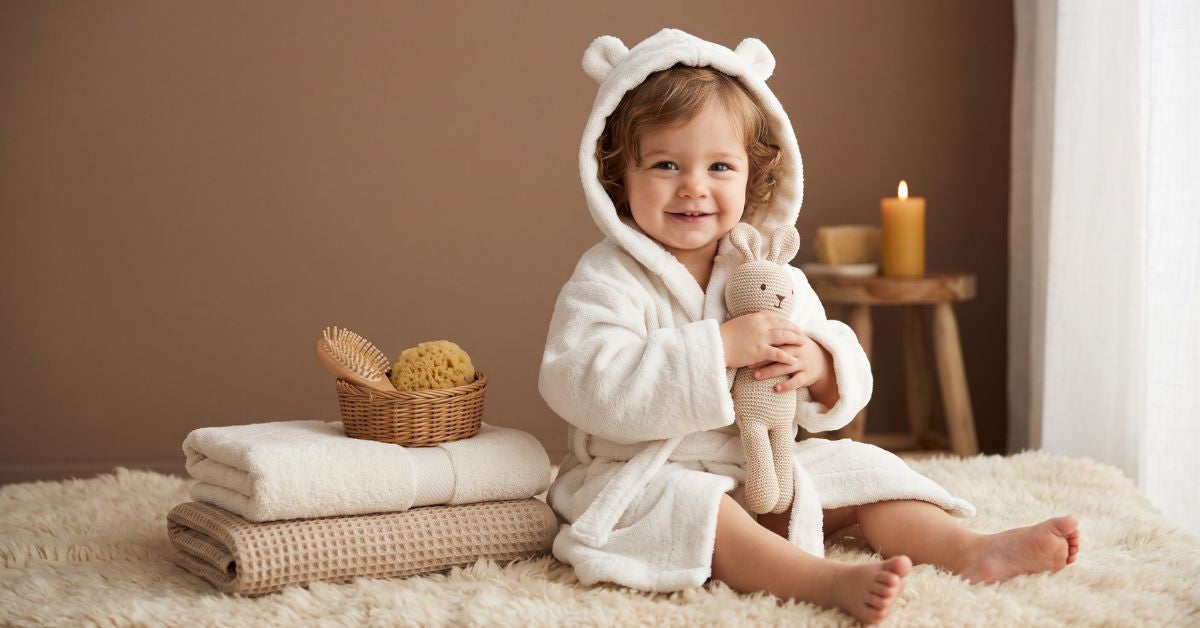
Selecting the best fabric for a toddler bathrobe is one of the more meaningful decisions a caring parent makes. The move from a warm soothing bath to the cooler air of a bedroom can feel abrupt for a young child, and a proper bathrobe smooths that transition, keeping the nighttime routine calm and comfortable. Toddler skin is thinner and considerably more delicate than adult skin. It loses moisture quickly and absorbs whatever touches it, including residue left behind by fabric finishes. That is why the material wrapped around a child right after bath time matters so much.
Finding the right fabric means weighing several factors together: organic versus regular textiles, any existing skin condition such as eczema or general allergies, a hooded design for extra warmth versus a simple collar for easy movement, and the balance between plush softness and fast water absorption. Budget plays a role too, since some parents want a basic everyday robe while others prefer a long lasting investment piece. This guide draws on established health and consumer authorities, including agencies within the U.S. Department of Health and Human Services and the U.S. Department of Agriculture, so you can make a confident, informed choice for your family at Thirsty Towels.
Understanding Toddler Skin and Why Fabric Choice Matters
A young child's skin barrier is still developing, which makes it more reactive to rough fabrics and synthetic chemical finishes than adult skin. When bathwater evaporates from the skin's surface, it cools the body quickly and can leave the outer layer slightly dehydrated. Wrapping a toddler in a harsh or non breathable textile at this moment can lead to micro abrasions, redness, and general discomfort.
The Centers for Disease Control and Prevention notes that thorough drying and consistent hygiene routines are an important part of preventing skin irritation and infection in young children (see CDC: Hygiene Fast Facts). Choosing a naturally soft, breathable fabric supports this goal by helping skin dry gently while keeping its natural moisture balance intact.
Organic Cotton or Regular Cotton: What the Evidence Shows
Parents often wonder whether certified organic fabric is worth the extra cost or whether regular cotton is perfectly fine. In most cases, high quality regular cotton is safe for children. Organic cotton, however, offers a few measurable advantages that matter for sensitive newborn and toddler skin.
Conventional cotton is grown at enormous scale worldwide and is frequently treated with synthetic pesticides and chemical fertilizers during cultivation. During manufacturing, some conventional fabrics are also finished with heavy metal dyes or chemical coatings, small amounts of which can remain in the fibers.
Organic cotton, by contrast, is grown using sustainable methods such as natural crop rotation and biological pest control. The United States Department of Agriculture maintains detailed federal standards for organic labeling, so a garment carrying the USDA organic seal has been produced without prohibited synthetic chemicals (see USDA: Organic Standards). The Environmental Protection Agency separately encourages manufacturers to use safer, more sustainable production methods through its Safer Choice program (see EPA: Safer Choice Program).
If your budget allows, certified organic fabric is an easy recommendation. If it does not, regular cotton remains a practical and absorbent choice. Just wash any new cotton bathrobe thoroughly before its first use to rinse away manufacturing residues.
The Best Fabrics for Eczema, Allergies, and Sensitive Skin
If your toddler has eczema, seasonal allergies, or generally reactive skin, fabric choice becomes even more important. Atopic dermatitis affects a large share of young children and causes red, inflamed, itchy patches of skin. The National Institute of Arthritis and Musculoskeletal and Skin Diseases explains that managing eczema well means identifying and avoiding known triggers, including rough or scratchy clothing and synthetic materials that trap sweat against the skin (see NIAMS: Atopic Dermatitis).
When a toddler with sensitive skin wears a non breathable fabric such as polyester fleece, body heat and moisture become trapped against the skin, and that trapped moisture can act as an irritant on its own. MedlinePlus, the National Library of Medicine's consumer health resource, notes that contact dermatitis is commonly triggered by exposure to synthetic dyes and unbreathable textiles (see MedlinePlus: Contact Dermatitis Overview).
For allergy prone children, prioritize fabrics that are one hundred percent natural. Cotton allows air to circulate freely, and bamboo derived viscose is another excellent option, since bamboo fibers are unusually smooth and glide over irritated skin rather than scratching it. The National Institute of Allergy and Infectious Diseases also points out that washable, breathable fabrics are a simple but important part of managing allergic skin conditions at home (see NIAID: Allergic Diseases).
If bamboo fabric is new to you, the companion guide on the best bath towels for sensitive skin walks through how bamboo and cotton blends compare for children with reactive skin.
Hooded or Hoodless: Choosing the Right Design
Design matters just as much as fabric. A hooded bathrobe is popular because toddlers lose a large amount of body heat through the head. When a child steps out of a warm bath with wet hair, rapid evaporation can make them feel cold almost instantly, and a generous hood lets you wrap wet hair right away to slow that heat loss.
Good drying habits support healthy skin more broadly. The Centers for Disease Control and Prevention highlights thorough drying as part of a routine hygiene practice that helps prevent skin infections in young children (see CDC: Hygiene Fast Facts).
A hoodless, simpler design can be a better fit for a toddler who mainly lounges in the robe on lazy mornings, since a bulky wet hood can feel heavy on an active child who wants to move freely. Whichever style you choose, safety should not be an afterthought. The Consumer Product Safety Commission maintains standards for children's sleepwear and loungewear, and recommends a snug fit along with securely sewn in belts rather than loose, detachable ties that can become a tripping or tangling hazard (see CPSC: Children's Sleepwear Standards).
Softness or Absorbency, and How Cotton Origin Plays a Role
Many parents face a simple dilemma: prioritize softness and comfort, or prioritize fast, functional absorbency. Ideally a fabric offers both, though different materials naturally lean one way or the other.
If getting a dripping wet toddler dry quickly is the priority, cotton terry cloth is hard to beat. Its structure of thousands of small uncut loops dramatically increases surface area, letting it pull water away from the skin the way a sponge does.
If plush comfort matters more, cotton muslin or microfleece are worth considering. Muslin is lightweight, breathable, and actually softens with every wash, making it a lovely option for warmer months. Fleece is cozy and warm but tends to repel water rather than absorb it, so it suits lounging better than drying off.
For a middle ground, bamboo blends absorb water noticeably faster than plain cotton while staying silky soft against the skin.
The origin and grade of the cotton itself also affects how a terry robe feels and performs over time. If you are deciding between Turkish and Egyptian cotton for a bathrobe or towel purchase, the detailed comparison of Turkish versus Egyptian cotton breaks down fiber length, softness, and durability so you can match the right cotton to your family's needs.
For families ready to shop, the Kids Bathrobe collection at Thirsty Towels features organic cotton and bamboo blend options sized for toddlers, and the Terry Bathrobes collection is a good starting point if absorbency is your top priority.
Setting a Budget: Everyday Robe or Investment Piece
Children grow quickly, which makes clothing budgets an ongoing balancing act. A budget friendly everyday robe made from a cotton and polyester blend is a sensible choice if your toddler will outgrow it within a few months. These robes are functional, though they may lose some softness after repeated laundering.
An investment piece made from certified organic Turkish cotton or high grade bamboo costs more upfront but tends to hold its texture and shape through many more wash cycles, which lowers the effective cost per wear, especially if you plan to hand it down to a younger sibling. The Federal Trade Commission's Care Labeling Rule requires manufacturers to include washing instructions on garments, and following those instructions is one of the simplest ways to extend the life of a higher quality robe (see FTC: Care Labeling Rule).
Fabric Recommendation
Use this quick comparison to match a fabric to your toddler's needs and your household priorities.
| Fabric | Best For | Absorbency | Softness | Notes |
|---|---|---|---|---|
| Organic Cotton Terry | Everyday use, sensitive skin | High | High | USDA certified, safe for daily wear, budget friendly to premium |
| Bamboo Viscose | Eczema, allergies, warm climates | High | Very High | Naturally smooth fibers, breathable, glides over irritated skin |
| Turkish Cotton Terry | Investment robes meant to last | Very High | Very High | Long fibers, excellent durability, softens over time |
| Egyptian Cotton Terry | Luxury feel, gift robes | High | Very High | Extra long staple fibers, silky finish |
| Cotton Muslin | Warm weather, lightweight lounging | Moderate | High | Softens with every wash, very breathable |
| Cotton Polyester Blend | Budget friendly everyday robe | Moderate | Moderate | Affordable, may lose softness after repeated washing |
| Microfleece | Cool weather lounging, not drying off | Low | High | Warm and cozy, but repels rather than absorbs water |
Our Recommendation: For most toddlers, including those with sensitive or eczema prone skin, a certified organic cotton or bamboo blend terry robe gives the best overall balance of softness, absorbency, and safety. If your family bathes a toddler daily and wants a robe that holds up for years or gets passed down to a younger sibling, a Turkish cotton terry robe is worth the extra investment. You can compare both options directly in Thirsty Towels' Terry Bathrobes collection, or start with the Kids Bathrobe collection for sizes and styles made specifically for toddlers.
Conclusion
Finding the best fabric for a toddler bathrobe means balancing comfort, absorbency, skin safety, and budget. Whether you choose a highly absorbent organic cotton terry robe with a warming hood, or a supremely soft bamboo collar design for sensitive skin, the right choice depends on your child's needs. By weighing the health and consumer guidance referenced throughout this guide, you can invest in a garment that makes bath time a cozy, safe, and enjoyable part of your toddler's routine.
Verified Sources and Reference Links
- USDA – Organic Standards
- NIAMS – Atopic Dermatitis (National Institutes of Health)
- MedlinePlus – Contact Dermatitis Overview (National Library of Medicine)
- NIAID – Allergic Diseases (National Institutes of Health)
- CDC – Hygiene Fast Facts
- CPSC – Children's Sleepwear Standards
- FTC – Care Labeling Rule
- EPA – Safer Choice Program