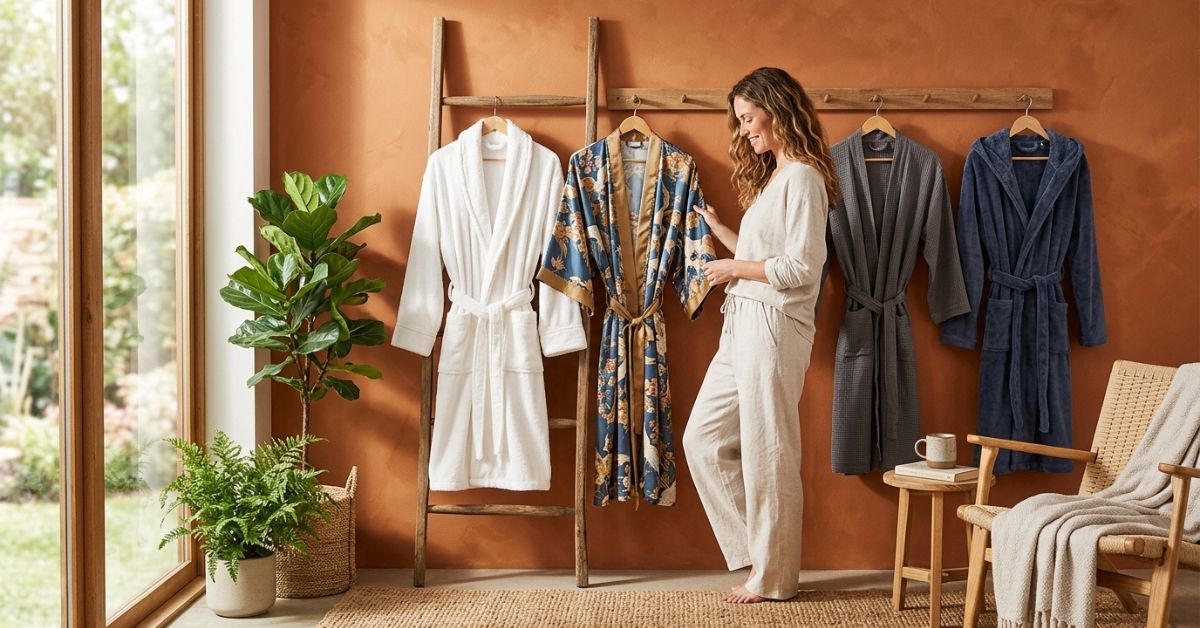
Whether you are stepping out of a warm shower, lounging on a Sunday morning, or getting ready for a spa day, the right robe changes the whole comfort experience. With dozens of styles, fabrics and fits on the market, picking the best one is not always straightforward, and getting it wrong is an easy (and common) mistake.
Different robes serve very different purposes. A plush bathrobe built for maximum water absorption will feel far too heavy on a hot summer morning, and a delicate silk kimono will not help you dry off after a bath. As specialists in absorbent robes and towels, ThirstyTowels has put together this comprehensive guide to break down every major type of robe, compare key fabrics against recognised safety and labelling standards, and help you choose the exact match for your lifestyle.
1. Robe Classification by Primary Function
Before comparing styles or fabrics, it helps to narrow down what you actually need your robe to do:
- Absorbent Bathrobes: Designed specifically to absorb moisture from skin after bathing or swimming. Functionality and weight take priority over delicate aesthetics.
- Loungewear and Leisure Robes: Crafted for relaxation, coverage and temperature regulation. These are meant to be worn over sleepwear or loungewear around the house.
- Specialty and Occasion Robes: Designed for specific aesthetic or practical uses, such as bridal preparations, spa treatments, hospital stays or recovery after a procedure.
2. Bathrobes vs Loungewear Robes: Key Differences
Understanding the difference between a traditional bathrobe and a general loungewear robe helps prevent buying the wrong piece for your routine.
| Feature | Bathrobe | Loungewear Robe |
| Primary Goal | Water absorption and quick drying | Comfort, coverage and style |
| Best Fabrics | Terry cloth, waffle weave, Turkish cotton | Silk, satin, fleece, modal, modal cotton blend |
| Weight | Medium to heavy (300 to 500+ GSM) | Light to medium |
| Wear Context | Right after a shower, pool or spa | Over pajamas, morning or evening routine |
3. Classic Bathrobe Styles and Silhouettes
Kimono Robe
Inspired by traditional Japanese garments, the kimono style robe features a flat, collarless neckline and wide cut sleeves. Because it lacks a thick, bulky collar, it stays lightweight, cool and easy to layer over loungewear.
Towel and Terry Cloth Bathrobe
The gold standard for drying off. Made with looped cotton threads designed to pull water off the skin instantly, terry cloth robes are heavy, durable and highly absorbent. If this is the category you are after, ThirstyTowels' own range of terry bathrobes is built specifically around this fabric.
Hooded Bathrobe
A favourite for colder climates or wet hair, hooded bathrobes provide extra coverage for the head and neck and trap body heat effectively right after a bath or shower.
Shawl Collar Robe
Featuring a thick, turned back collar that wraps cozy coverage around the neck and chest, the shawl collar style is classic, timeless and typically found in hotel and luxury spa settings.
4. Modern and Specialty Robe Types
Plush and Fleece Robe
If insulation and softness are your main priorities, synthetic fleece or plush microfleece robes deliver maximum warmth without heavy weight. Fleece repels water rather than absorbing it, so it works best as a winter housecoat rather than a post shower robe.
Waffle Weave Robe
Characterised by a three dimensional grid pattern, waffle robes are lightweight and breathable. The woven texture increases surface area for fast drying while keeping the garment airy, making it the top choice for hot weather and high end spas.
Silk and Satin Robes
Satin and pure mulberry silk robes offer a smooth, friction free drape against the skin. Silk is naturally thermoregulating and is commonly described as hypoallergenic, which is a genuine consideration for anyone managing eczema or other sensitive skin conditions, as outlined in guidance from the National Institute of Arthritis and Musculoskeletal and Skin Diseases. For a deeper comparison of fabric choices for reactive skin, see ThirstyTowels' guide to the best bath towels for sensitive skin, since the same fibre principles apply directly to robes.
It is also worth noting that the term hypoallergenic is a marketing description rather than a regulated medical guarantee. The U.S. Food and Drug Administration notes that there are no federal standards governing the use of this term on textiles or cosmetics, so anyone with diagnosed skin sensitivities should still patch test new fabrics.
Zip Front and Snap Front Housecoats
Unlike classic tie belt robes that can slip open, zip front or snap button robes offer full coverage security. They are popular for recovery after surgery, maternity use, or casual tasks around the house where one handed dressing matters.
5. Robe Length Options: Short, Mid and Full Length
Selecting the right hemline depends on climate and personal preference:
- Short / Knee Length (35 to 40 inches): Great for warmer seasons, easy movement, and morning beauty routines where you do not want fabric getting in the way.
- Mid Calf / Tea Length (45 to 48 inches): The most versatile option, offering a balance of coverage, warmth and mobility.
- Full Length / Ankle Length (50 to 58 inches): Maximum coverage and warmth for cold weather, ideal for lounging on chilly evenings.
6. Fabric Science: What Makes a Robe Absorbent or Soft
The performance of any bathrobe depends heavily on its fabric composition:
- Long Staple Turkish Cotton: Renowned for long fibres that become softer and more absorbent with every wash. Ideal for premium plush bathrobes. Cotton fibre length and quality in the United States are tracked and graded through the official classification system run by the USDA Agricultural Marketing Service.
- Egyptian Cotton: Exceptionally dense and soft, offering luxury weight and high moisture retention. If you are trying to decide between the two premium options, ThirstyTowels has published a full breakdown of Turkish cotton versus Egyptian cotton to help you compare feel, durability and price.
- Bamboo Viscose: Naturally moisture wicking, highly breathable and silky smooth. Excellent for sensitive skin and hot sleepers.
- Microfiber: Synthetically engineered fine threads that create an ultra soft, lightweight barrier, though less absorbent than natural cotton loops.
7. How Fabric Weight (GSM) Affects Comfort
GSM stands for Grams per Square Meter and measures fabric density. The table below shows how each range typically feels and where it performs best.
| GSM Range | Feel | Best Use |
| 200 to 300 GSM (Lightweight) | Cool, compact, fast drying | Summer, waffle weave, travel |
| 350 to 450 GSM (Medium Weight) | Balanced, everyday feel | All year, classic bathrobe |
| 500+ GSM (Heavyweight) | Deep warmth, heavy absorbent feel | Winter, hotel style luxury plush |
8. Common Robe Problems and Practical Solutions
Problem: My bathrobe feels rough after a few washes.
Solution: Avoid fabric softeners. Softeners coat natural cotton fibres in a wax like film that reduces absorbency and makes loops feel stiff over time. Use a cup of white vinegar during the rinse cycle instead to dissolve detergent buildup. Always check the sewn in care label first, since garment care symbols are regulated in the United States under the Textile Fiber Products Identification Act, enforced by the Federal Trade Commission.
Problem: My robe belt keeps coming undone or gets lost in the laundry.
Solution: Look for robes with double belt loops to adjust waist height, or opt for an attached belt stitched directly onto the back seam.
Problem: The robe feels too hot and heavy after showering.
Solution: Switch from heavy plush terry to a cotton waffle weave or bamboo blend with a lower GSM count.
9. How to Choose the Right Robe for Every Season
- Summer: Lightweight waffle weave, bamboo viscose, or 100 percent silk.
- Winter: Double faced terry velvet, heavy Turkish cotton, or plush microfleece.
- Year Round: Medium weight cotton loop (350 to 400 GSM) with a classic shawl collar.
10. Men's vs Women's Robes: Key Fit Differences
While many robes are unisex, gender specific cuts feature distinct tailoring:
- Women's Cut: Slightly narrower shoulders, tapered waists, higher belt loop placement, and shorter sleeve lengths to avoid sweeping across counters.
- Men's Cut: Broader shoulder construction, wider chest measurements, longer sleeve lengths, and lower belt placement near the hips.
11. Choosing a Safe and Comfortable Robe for Kids
Children's robes need the same absorbency and comfort as adult styles, but softness should never come at the expense of safety. In the United States, children's sleepwear and robe like garments intended for young children fall under flammability rules maintained by the Consumer Product Safety Commission, with detailed technical requirements set out in the Standard for the Flammability of Children's Sleepwear. When shopping for young children, look for garments from retailers that clearly reference compliance with these standards, such as ThirstyTowels' dedicated kids bathrobe range, which is sized and designed specifically for smaller frames.
12. Care and Maintenance Guide to Extend Robe Life
- Wash Before First Use: Sets the cotton weaves and removes residual manufacturing fibres.
- Use Cool to Warm Water: Prevents shrinkage, especially for 100 percent natural cotton or bamboo.
- Skip Fabric Softeners: Use vinegar or wool dryer balls to maintain fibre fluffiness and absorbency.
- Tumble Dry on Low Heat: High heat damages cotton loops and causes synthetic fleece to mat down over time.
Recommendation Table: Which Robe Should You Choose
| Your Need | Recommended Robe Type | Best Fabric and Weight |
| Drying off after a shower or pool | Terry cloth or waffle weave bathrobe | Turkish cotton, 350 to 500 GSM |
| Hot summer mornings | Kimono or waffle weave robe | Bamboo viscose or cotton, 200 to 300 GSM |
| Cold winter evenings | Shawl collar or plush fleece robe | Heavy Turkish cotton or microfleece, 500+ GSM |
| Sensitive or eczema prone skin | Silk or bamboo robe | Mulberry silk or bamboo viscose |
| Everyday use for children | Hooded or kids bathrobe | Soft cotton terry, lighter GSM for smaller frames |
| Recovery after surgery or maternity use | Zip front or snap front housecoat | Lightweight cotton blend |
Sources
- Federal Trade Commission: Textile Fiber Products Identification Act
- Federal Trade Commission: Care Labeling Requirements Guidance
- U.S. Consumer Product Safety Commission: Flammable Fabrics Act
- Electronic Code of Federal Regulations: Standard for the Flammability of Children's Sleepwear
- National Institute of Arthritis and Musculoskeletal and Skin Diseases: Atopic Dermatitis
- U.S. Food and Drug Administration: Hypoallergenic Claims