Last updated September 2026. Reviewed against current US federal textile safety and labeling guidance from CPSC, FTC, USDA, CDC, and NIH.
Quick Summary
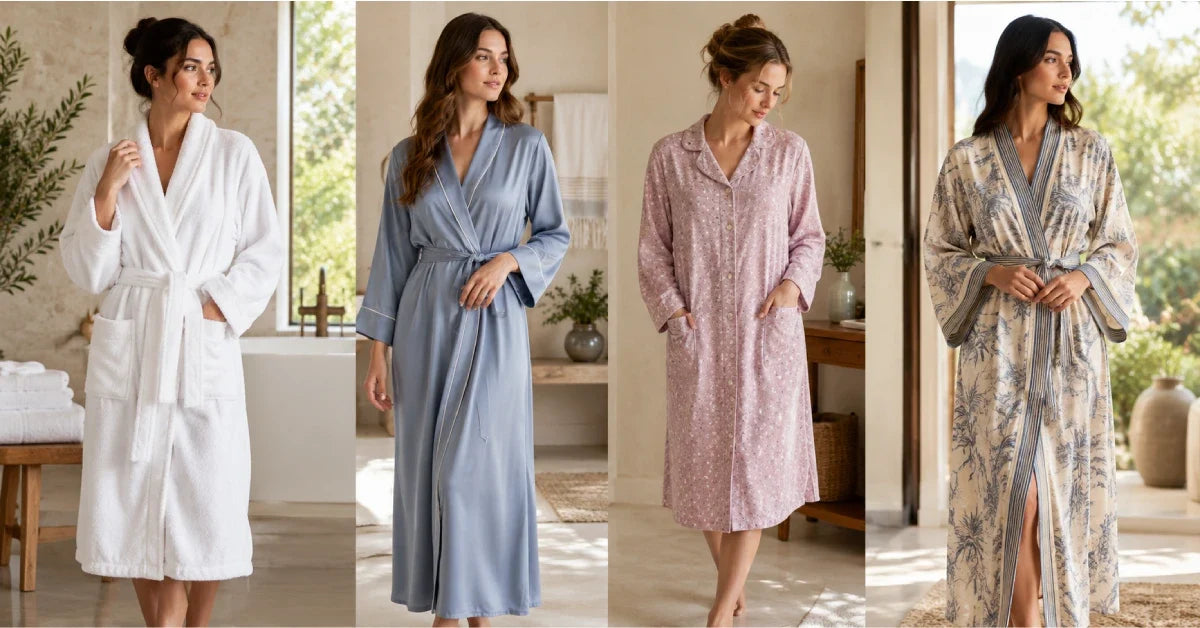
A robe is the umbrella term for any open front garment that wraps around the body and ties at the waist. The style you actually want depends on one question: are you putting it on wet or dry? A bathrobe (cotton terrycloth or waffle weave, roughly 350 to 600 grams per square meter) is built to absorb water off wet skin. A dressing gown (silk, wool, fleece, or fine cotton) is built for warmth and drape over dry skin or sleepwear. A housecoat swaps the wrap belt for a zipper, snaps, or buttons and is meant for chores. A kimono robe borrows the flat collar and wide sleeves of a traditional Japanese kimono but is Western loungewear, not formal dress. A peignoir is sheer lingerie, not everyday loungewear.
- In the United States, all wearing apparel including robes must pass the flammability testing in 16 CFR Part 1610, enforced by the Consumer Product Safety Commission.
- Robes marketed to children up to size 14 for sleep related use fall under the separate children's sleepwear standards, 16 CFR Parts 1615 and 1616.
- Every robe sold in the US needs a permanent care label under the Federal Trade Commission's Care Labeling Rule, 16 CFR Part 423.
- Wash a bathrobe every 3 to 4 wears and a dressing gown every 10 to 14 wears or as needed, using the warmest water the care label allows, which lines up with CDC home laundry guidance.
- NIH's MedlinePlus recommends applying moisturizer within minutes of stepping out of the shower while skin is still damp, which is exactly what a fast drying bathrobe helps you do.
What Is a Robe?
A robe is any loose fitting, open front outer garment that wraps around the body and closes with a belt or sash at the waist. It is an umbrella term, so a bathrobe, a dressing gown, a housecoat, a kimono robe, and a peignoir are all technically robes, even though each one is built for a different moment in your day.
The category traces back to medieval outer garments and now spans everything from heavy winter fleece to sheer lace. The dividing line that matters most for buying decisions is moisture handling: some robes are made to sit on wet skin, and some are made to sit on dry skin.
For a full breakdown of every style on the market today, see our guide to types of robes, and for a fiber by fiber comparison, read the best material for a robe.
How Do the Five Robe Types Relate to Each Other?
Every style below sits under the robe umbrella, but they split into two practical groups: garments meant for wet skin, and garments meant for dry skin.
| Group | Garment | Typical Fabric |
|---|---|---|
| Wet use | Bathrobe | Cotton terrycloth, waffle weave |
| Wet use | Beach or spa robe | Lightweight terry blends |
| Dry use | Dressing gown | Silk, wool, fleece |
| Dry use | Housecoat | Cotton blend, quilted polyester |
| Dry use | Peignoir | Sheer chiffon, lace |
What Is the Difference Between a Robe and a Dressing Gown?
The difference comes down to region and moisture handling. In American English, robe is the umbrella term, while dressing gown is the term most common in British English for a tailored, non absorbent garment worn over dry skin or sleepwear rather than straight out of the shower.
Fabric tells you the rest of the story. Dressing gowns favor silk, satin, cashmere, wool, and high thread count cotton, all chosen for drape and warmth rather than absorbency, so they are washed like delicate clothing, roughly every 10 to 14 wears, instead of after every use.
What Makes a Bathrobe So Absorbent?
A bathrobe is built from looped or waffled cotton fibers that pull water and body oil off wet skin within seconds of stepping out of the shower. Terrycloth uses raised fiber loops, while waffle weave uses a three dimensional grid, and both designs increase surface area so the fabric actively dries the body instead of just sitting on top of it.
Fabric weight is measured in grams per square meter, or GSM, and most quality cotton bathrobes fall between 350 and 600 GSM, a heavier range than a standard bath towel. If you want the full explanation of how GSM affects softness and drying speed, read what GSM means in towels, and browse our terry cotton bathrobe collection to compare weights in person.
Because bathrobes absorb moisture, oils, and residual soap the same way a towel does, they need frequent laundering in warm or hot water. For step by step instructions, see how to wear a bath robe for the full care and fit routine.
What Is a Dressing Gown Used For?
A dressing gown is worn once you are already dry, layered over pajamas or daywear for warmth, modesty, and comfort before or after sleep. It dates back to 18th century gentlemen who wore a loose gown in their private quarters while preparing, or dressing, for the day, and the modern version still serves that same in between purpose.
Dressing gowns prioritize softness and drape over absorbency, so wearing one on wet skin can water spot silk or wool and feel uncomfortable against damp skin. If you are choosing a fabric for a specific climate or routine, the best material for a robe walks through the tradeoffs between silk, wool, fleece, and cotton blends.
Is a Kimono Robe an Actual Japanese Kimono?
No, a Western kimono robe is not an authentic Japanese kimono. It only borrows two design cues, a flat collarless neckline and wide, drop shoulder sleeves, while a genuine kimono is a structured, T shaped, hand woven garment bound with a stiff obi sash and worn for formal or ceremonial occasions.
| Feature | Traditional Japanese Kimono | Western Kimono Style Robe |
|---|---|---|
| Silhouette | T shaped, straight lines | Open front wrap with sash |
| Fabric | Hand woven silk or heavy cotton | Lightweight satin, rayon, or polyester |
| Belt | Stiff, wide obi | Soft fabric sash |
| Occasion | Formal, ceremonial wear | Casual loungewear or cover up |
Sleeve design also separates the two categories in everyday use. A bathrobe uses inset sleeves that hug the arms for warmth and drying, while a kimono robe uses wide, rectangular sleeves built for airflow and layering over a nightgown without added bulk.
What Is a Housecoat and How Is It Different From a Robe?
A housecoat is a loose, full length or knee length garment made for chores and everyday wear around the house, closed with a zipper, snaps, or buttons instead of a wrap belt. That fixed closure is the key structural difference from a bathrobe or dressing gown, since both of those rely on an open front crossover secured only by a tie.
- Secure closures so the garment will not open while bending, reaching, or cleaning.
- Deep patch pockets for a phone, keys, or reading glasses.
- Durable, easy care fabrics such as cotton blends, quilted polyester, fleece, or denim.
- A modesty first fit, styled like an elongated dress, so sleepwear stays covered around family or visitors.
What Does Peignoir Mean and When Is It Worn?
Peignoir comes from the French verb peigner, meaning to comb the hair, and originally described a sheer cape worn at the vanity table to protect sleepwear from powder and hair while getting ready. Today it refers to a luxury lingerie layer, a sheer flowing robe worn over a matching nightgown as a peignoir set, so it is romantic loungewear rather than an everyday garment.
- Fabric: chiffon, lace, silk tulle, or sheer satin.
- Fit: voluminous, floating silhouette.
- Closure: a delicate ribbon tie at the throat or bust line.
- Function: aesthetic appeal rather than absorbency or warmth.
Are Robes Regulated for Safety in the United States?
Yes. Under the Flammable Fabrics Act, the US Consumer Product Safety Commission enforces the General Wearing Apparel Standard at 16 CFR Part 1610, which tests how quickly a fabric burns, sorts textiles into three flammability classes, and bans the most dangerously flammable Class 3 fabrics from any clothing sold in the country, robes included.
Robes marketed for children are covered by a separate, stricter rule. The CPSC's children's sleepwear standards, 16 CFR Parts 1615 and 1616, apply to nightgowns, pajamas, robes, and other loungewear intended primarily for sleep related activities in sizes 0 through 14, and require both the fabric and the finished garment to pass open flame testing before sale. If you are shopping for a child, our guide to choosing the best fabric for a toddler bathrobe covers what to look for, and the kids bathrobe collection is built around soft, easy care fabrics sized for that age range.
Every robe sold to US consumers, adult or children's, also needs a permanent tag under the FTC's Care Labeling Rule, 16 CFR Part 423, which requires manufacturers and importers to disclose at least one safe, regular care method, such as machine washable or dry clean only, for the useful life of the garment.
How Should You Wash and Care for Different Robe Types?
Wash a bathrobe every 3 to 4 wears because it absorbs skin oil and moisture the same way a towel does, and wash a dressing gown every 10 to 14 wears, or spot clean it, since it is worn over clean sleepwear or dry skin. Always defer to the care label first, since fiber content changes what water temperature and dryer setting are actually safe.
The CDC's home hygiene guidance recommends washing laundry on the warmest water setting the fabric allows and drying items completely, since heat and full drying reduce the germs that build up in frequently worn textiles like bathrobes and towels.
Wash bathrobes separately from regular clothing when possible. Their loop pile construction sheds heavy lint that clings to other fabrics, and they typically need higher water temperatures and longer dry cycles than everyday clothes.
Is Organic Cotton Worth Choosing for a Robe?
Organic cotton is worth choosing if you want fewer synthetic inputs from farm to fabric, though it will not automatically make a robe more absorbent or more durable than conventional cotton. Under the USDA National Organic Program, raw cotton is regulated as an agricultural product, and a finished robe can only display the USDA organic seal if it was produced in full compliance with those federal regulations from field to finished garment.
Textiles that meet the Global Organic Textile Standard, known as GOTS, can also be sold as organic in the US even without the USDA seal, according to the same USDA guidance. If that matters for your household, our organic cotton bathrobe collection is a practical place to compare certified options side by side.
How Does the Right Robe Support Healthy Skin After Bathing?
The right robe protects the moisture your skin just absorbed in the shower instead of stripping it back out through evaporation or rough rubbing. NIH's MedlinePlus dry skin self care guidance recommends limiting baths and showers to 5 to 10 minutes in lukewarm water and applying moisturizer within minutes of stepping out while skin is still damp, since damp skin loses water quickly once it is exposed to air.
A highly absorbent terrycloth or waffle weave bathrobe removes surface water fast without repeated rubbing, which the same MedlinePlus guidance flags as a driver of tight, itchy, irritated skin. If sensitivity is a concern in your household, the best bath towels for sensitive skin covers the softer, lower irritation fabric options that apply equally well to bathrobes.
Summary Matrix: Which Garment Fits Which Moment?
| Garment | Primary Use | Best Fabric | Closure | Absorbency | Wash Every |
|---|---|---|---|---|---|
| Bathrobe | Drying off after a shower or pool | Cotton terry, waffle, microfiber | Crossover belt | High | 3 to 4 wears |
| Dressing gown | Morning or evening relaxation | Silk, fleece, wool, modal | Crossover belt | Low | 10 to 14 wears |
| Housecoat | Chores and domestic lounging | Quilted poly, cotton blend | Zipper, buttons, snaps | None | As needed |
| Kimono robe | Warm weather lounging, cover up | Satin, rayon, silk | Crossover sash | Low | 10 to 14 wears |
| Peignoir | Lingerie layering, romantic wear | Chiffon, lace, sheer silk | Neck or chest ribbon | None | Spot clean |
Our Recommendations
If you are shopping today, start with the moment you need to dress for rather than the prettiest photo.
- Daily shower drying: choose the terry cotton bathrobe collection for the highest absorbency and fastest drying time.
- Sensitive skin or fewer synthetic inputs: choose the organic cotton bathrobe collection, and check for a USDA seal or GOTS certification on the listing.
- Cold mornings or stepping out of a hot tub: choose the hooded bathrobe collection to cover wet hair and trap warmth immediately.
- Children's sleepwear or bath time: choose the kids bathrobe collection, and confirm the flammability labeling required under CPSC rules before you buy.
Not sure where to start: browse the full bathrobe collection and filter by fabric weight and size.
Sources
- US Consumer Product Safety Commission, Flammable Fabrics Act business guidance
- US Consumer Product Safety Commission, Children's Sleepwear FAQ (16 CFR Parts 1615 and 1616)
- Federal Trade Commission, Apparel and Care Labeling guidance (16 CFR Part 423)
- US Department of Agriculture, Agricultural Marketing Service, Organic Textiles guidance
- Centers for Disease Control and Prevention, home cleaning and laundry hygiene guidance
- National Institutes of Health, MedlinePlus, Dry Skin Self Care
Related Reading
- Types of robes
- Best material for a robe
- How to wear a bath robe
- What is GSM in towels
- How to choose the best fabric for a toddler bathrobe
- Best bath towels for sensitive skin