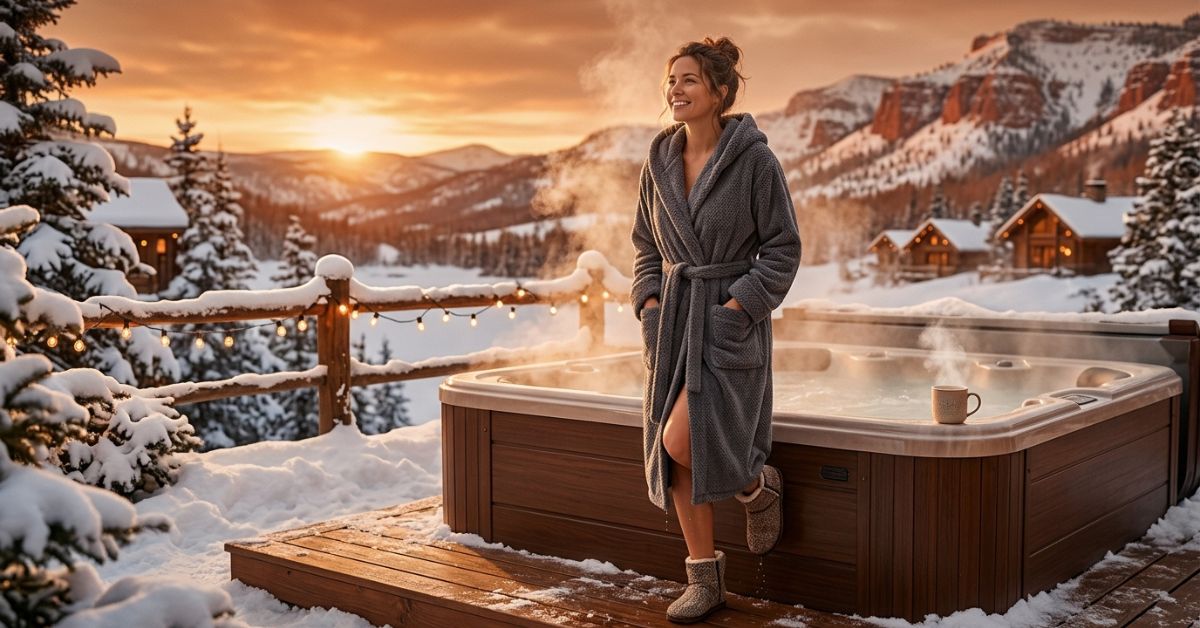
There is nothing quite like relaxing in a hot tub on a crisp winter evening. The warm water, the cool air, and the quiet surroundings create a genuinely restorative way to unwind. But the moment you step out into freezing temperatures, that relaxation can turn into a shivering scramble for the door if you are not prepared.
At Thirsty Towels, we have spent years studying how fabric weight, weave, and fiber length affect warmth and absorbency, and this guide draws on that experience along with published guidance from federal health and safety agencies. Below, we cover the features that separate an ordinary robe from the best robe for a hot tub in winter, the science behind why certain fabrics perform better in the cold, and how to protect yourself and your family during every soak.
Why a Dedicated Hot Tub Robe Matters in Winter
A regular house robe is not always built for wet conditions. After a hot tub session, your robe needs to do more than cover you. It needs to pull moisture off your skin quickly and trap body heat while you walk back indoors. According to the Consumer Product Safety Commission, soaking in hot water raises your core body temperature, and stepping into cold air immediately afterward can cause a rapid temperature swing that leaves skin damp and exposed. A well made robe softens that transition considerably.
A good hot tub robe can:
- Absorb excess moisture within seconds of stepping out of the water
- Help the body retain heat during the walk indoors
- Protect skin from sudden exposure to cold, dry winter air
- Reduce the need for multiple bath towels
- Make the entire spa experience feel more comfortable and luxurious
Many hot tub owners prefer a robe over a towel simply because it keeps both hands free while moving across a wet deck or patio. Cold, wet conditions combined with slick surfaces are exactly the scenario safety officials warn about each winter.
Understanding the Real Winter Risk: Hypothermia After a Soak
It is easy to underestimate how quickly a warm body can lose heat once it leaves hot water. The Centers for Disease Control and Prevention explains that hypothermia can occur even at temperatures above 40 degrees Fahrenheit if a person becomes chilled from wet skin or wet clothing, which is precisely the situation anyone faces when they step out of a hot tub into winter air.
The National Institute for Occupational Safety and Health, part of the CDC, notes in its cold stress guidance that hypothermia can occur in any water temperature below 70 degrees Fahrenheit and develops faster once a person is wet. The National Weather Service adds that changing into dry layers immediately after getting wet is one of the most effective ways to prevent cold related illness.
Older adults face a higher risk. The National Institute on Aging points out that changes associated with aging can make it harder for a person to sense that their body is getting too cold, which is one more reason a fast drying, heat trapping robe belongs beside every home hot tub. The Massachusetts Department of Public Health recommends moving a cold person to a warm space, removing wet clothing right away, and covering them with dry layers if hypothermia is suspected. Keeping a thick, absorbent robe within arm's reach of the hot tub puts that first step within immediate reach.
What Makes the Best Robe for a Hot Tub in Winter
1. Highly Absorbent Fabric
The moment you leave the hot tub, your robe should begin pulling moisture off your skin. One of the best materials for this job is one hundred percent Turkish cotton. Its long staple fibers create a fabric that stays absorbent wash after wash and actually becomes softer with repeated use. If your priority is drying off quickly, it is worth avoiding robes made primarily from synthetic fleece, since fleece traps warmth well but absorbs comparatively little moisture.
2. Warm Without Feeling Heavy
A winter robe should insulate without feeling bulky. A medium to heavy terry cotton robe strikes a good balance of warmth, breathability, and moisture absorption. Fabric weight is measured in grams per square meter, often shortened to GSM, and it is one of the clearest indicators of how a robe will perform. We cover this in detail in our guide to understanding GSM in towels, which explains why a heavier GSM generally means better absorbency and warmth, while a lighter GSM dries faster and packs smaller.
3. Full Length Coverage
When temperatures drop toward or below freezing, coverage matters. A robe that reaches mid calf or ankle length protects the legs, knees, and ankles far better than a short robe, which makes the walk from the hot tub back indoors noticeably more comfortable.
4. A Hood for Extra Warmth
A hood is one of the most overlooked features in a winter robe. Since wet hair loses heat quickly, a hood helps keep the head and neck warm right after stepping out of the water. This is especially useful on windy evenings or snowy nights.
5. Secure Belt and Spacious Pockets
A sturdy waist belt keeps the robe closed while you move around outdoors, and deep pockets are genuinely useful for carrying a phone, a spa key, lip balm, or gloves. These small design details make a noticeable difference in everyday convenience.
Terry Cloth or Waffle Weave: Which Should You Choose?
Both weaves have their place, and the right choice depends on how and where you plan to use the robe. The table below compares them directly.
| Feature | Terry Cloth | Waffle Weave |
|---|---|---|
| Best for | Cold winter weather and outdoor hot tub use | Mild climates and indoor spa use |
| Absorbency | Excellent, ideal for drying off immediately | Moderate, lighter touch on the skin |
| Warmth | High, plush loops trap body heat | Lower, better suited to warm weather |
| Drying time | Slower to air dry due to density | Faster drying between uses |
| Weight and feel | Heavier, hotel style comfort | Lightweight and breathable |
For outdoor winter hot tub sessions, terry cloth is generally the better choice, since it combines warmth with strong moisture absorption in a single layer.
Why Turkish Cotton Performs So Well in Winter
If you are investing in a premium bathrobe, Turkish cotton is one of the strongest choices available. Its long fibers create a fabric that is soft, highly absorbent, durable, breathable, and quick to dry compared to shorter staple cotton. Unlike many synthetic plush robes, Turkish cotton continues to improve with use, becoming softer after repeated washing while holding onto its absorbency.
Skin sensitivity is worth considering too, particularly after time spent in chlorinated or bromine treated spa water. Our guide to choosing the best bath towels for sensitive skin walks through which fibers and finishes are gentlest on reactive skin, and the same principles apply directly to bathrobes.
Caring for Your Robe So It Performs All Season
A robe that has lost its softness or absorbency will not perform the way it did when new, and that usually comes down to washing habits rather than fabric quality. If your robe has become stiff, scratchy, or less absorbent over time, our step by step guide on how to make towels soft again applies equally well to robes and covers detergent buildup, fabric softener overuse, and proper drying technique.
As a quick reference, wash your robe in cold or warm water with a mild detergent, avoid excessive fabric softener, and tumble dry on low heat or air dry when possible to preserve both softness and absorbency.
Family Hot Tub Nights: What About Kids?
If children are part of your winter hot tub routine, they need the same fast drying protection as adults, scaled to their size. Our toddler robe size chart guide makes it easy to find an accurate fit, and our guide to choosing the best fabric for a toddler bathrobe explains which materials are gentlest and warmest for young skin. The CPSC also recommends constant adult supervision whenever children are in or near a spa, regardless of what they are wearing.
Safety Checklist for Hot Tub Season, Beyond the Robe
A great robe is only one part of a safe, comfortable winter soak. Federal safety agencies highlight a few additional precautions worth building into your routine.
- Keep water temperature at or below 104 degrees Fahrenheit, the limit recommended by the Consumer Product Safety Commission.
- Avoid alcohol before or during a soak, since combined heat and alcohol can cause drowsiness and increase drowning risk.
- Keep electrical devices well away from the water, and confirm nearby outlets have ground fault circuit interrupter protection, per CPSC electrical safety guidance.
- Place your robe and slippers within easy reach before entering the water so you are not walking far in wet, cold conditions.
- Watch for early signs of hypothermia, including shivering, slurred speech, and confusion, and move indoors immediately if they appear.
Tips for Staying Warm After Your Hot Tub
- Place your robe within easy reach before entering the hot tub
- Put it on immediately after stepping out
- Pair it with warm slippers or spa sandals
- Wear the hood when temperatures are especially low
- Keep the walk between the hot tub and indoors as short as possible
Our Recommendation
For outdoor winter use, we recommend a full length, hooded terry robe in one hundred percent Turkish cotton, paired with a few complementary pieces that round out the experience. Browse our full bathrobes collection to compare weights and lengths side by side.
| What to pair it with | Why it helps |
|---|---|
| Turkish towels | Keep an extra Turkish towel nearby for hair or a second layer of drying power on especially cold nights. |
| Shower wraps | A shower wrap is a convenient option for quickly wrapping up while your robe is still in the wash. |
| Olive oil soap | Rinsing off spa chemicals with a gentle olive oil soap before you towel off can help protect sensitive skin. |
Sources
- CDC, Preventing Hypothermia
- CDC NIOSH, Cold Related Illnesses in Workers
- National Weather Service, During Extremely Cold Weather
- National Institute on Aging, Cold Weather Safety for Older Adults
- Massachusetts Department of Public Health, Cold Weather Safety: Prevent Hypothermia and Frostbite
- U.S. Consumer Product Safety Commission, Warning for Pools, Spas and Hot Tubs
- U.S. Consumer Product Safety Commission, Warns of Hot Tub Temperatures
- U.S. Consumer Product Safety Commission, Don't Swim With Shocks