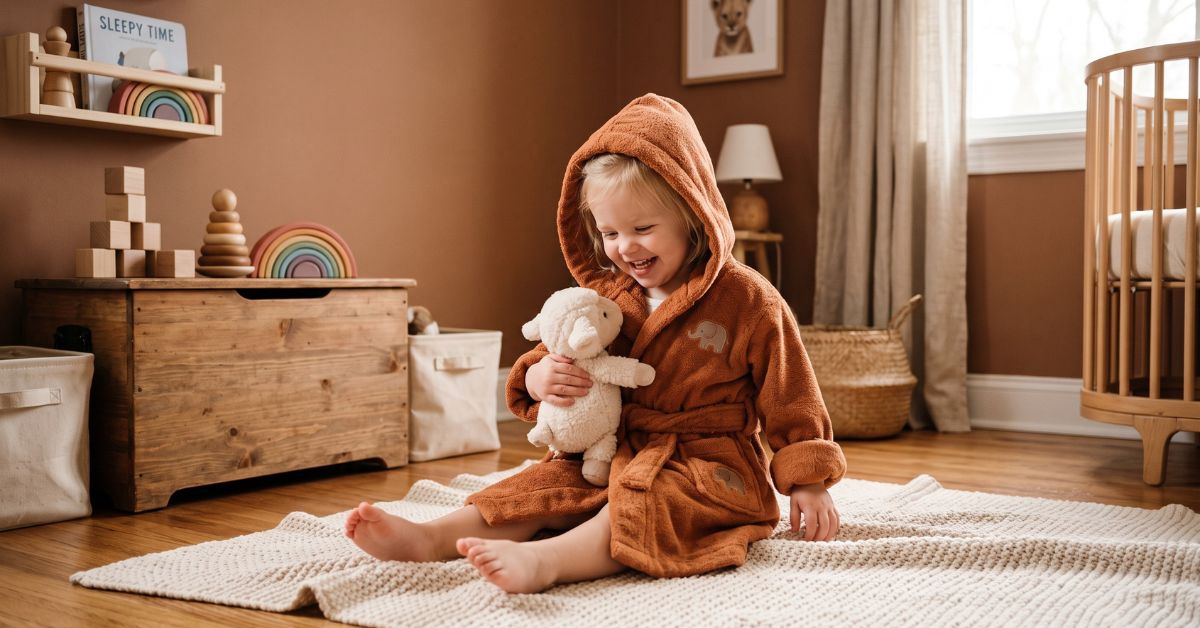
Buying a toddler robe seems simple until you are staring at labels like 2T, 3T, or a dual size range like 2T to 3T, wondering whether your child will trip over the hem or outgrow the robe in two months. Unlike everyday clothes, robes have their own fit mechanics. Extra fabric around the hem creates a tripping hazard for early walkers, while a rigid belt can restrict movement or come undone easily. Getting the right fit means balancing length, torso width, and room to grow, all without sacrificing safety.
This guide reflects U.S. children's clothing size conventions and is cross referenced with U.S. pediatric growth data, so the ranges below match what you will see on labels in American stores such as Thirsty Towels.
Why Standard Clothing Sizes Do Not Always Work for Robes
If you rely only on your child's standard shirt or pants size, you run a real risk of ending up with a robe that is either dangerously long or uncomfortably tight across the chest.
Toddlers grow taller much faster than they gain weight, so a robe sized for a tall three year old might swallow a slimmer child whole. Robes are also worn over pajamas or wet swimwear, which means they need extra width through the torso compared to an everyday shirt. Most importantly, standard tops end at the waist, but robes extend well past the knee. A robe that is even two inches too long can turn ordinary steps and stairs into a real fall risk, a concern echoed in the CDC's guidance on early childhood developmental milestones, which notes how quickly balance and coordination are still developing at this age.
The Toddler Robe Fit Triangle
Three factors work together to determine whether a robe fits safely and comfortably. Use this table as a quick reference before you buy.
| Fit Factor | What to Check | Why It Matters |
|---|---|---|
| Height and Length | The hem should land between mid calf and just above the ankle | Prevents tripping while still keeping legs warm |
| Weight and Chest | Enough wrap overlap across the front without gaping open | Ensures the robe closes fully over pajamas or swimwear |
| Sleeve and Shoulder | Cuffs can be rolled up without restricting arm movement | Keeps hands free for play while retaining warmth |
Toddler Size Chart by Age, Height, and Weight
Use this size chart as a baseline reference, and always prioritize height and weight over age when making your final decision. The height and weight ranges below align with growth patterns published in the CDC's clinical growth charts, which pediatricians in the United States use to track healthy child development.
| Size Range | Approximate Age | Height Range | Weight Range | Recommended Robe Length |
|---|---|---|---|---|
| 12 to 18M | 12 to 18 Months | 30.5 to 32 in (77 to 81 cm) | 24 to 28 lbs (11 to 13 kg) | 18 to 20 in (45 to 51 cm) |
| 18 to 24M | 18 to 24 Months | 32 to 33.5 in (81 to 85 cm) | 28 to 30 lbs (13 to 14 kg) | 20 to 22 in (51 to 56 cm) |
| 2T | 2 Years | 33.5 to 35 in (85 to 89 cm) | 30 to 32 lbs (14 to 15 kg) | 22 to 24 in (56 to 61 cm) |
| 3T | 3 Years | 35 to 38 in (89 to 96 cm) | 32 to 35 lbs (15 to 16 kg) | 24 to 26 in (61 to 66 cm) |
| 4T | 4 Years | 38 to 41 in (96 to 104 cm) | 35 to 39 lbs (16 to 18 kg) | 26 to 28 in (66 to 71 cm) |
| 5T | 5 Years | 41 to 44 in (104 to 112 cm) | 39 to 43 lbs (18 to 20 kg) | 28 to 30 in (71 to 76 cm) |
Measurement tip: measure your child from the top of the shoulder down to mid calf. This is the ideal robe hemline, since it keeps them warm while leaving their ankles free for running and playing.
Understanding the Difference Between 2T and 24 Months
Many parents wonder if 24 Months and 2T are interchangeable. While the two target similar ages, their cuts are fundamentally different.
- 24 Months: cut with wider seats and hips to accommodate bulky diapers and swim nappies. Ideal for toddlers who are still crawling or using diapers full time.
- 2T: designed for toddlers who are potty training or fully potty trained. The cut is slimmer through the hips and slightly longer in the torso and sleeves to match upright, active movement.
For robes specifically, choose 24 Months if your child is still in diapers and needs extra overlap. Choose 2T if they are walking confidently and wearing regular underwear.
Barefoot Dreams Size Chart and Sizing Breakdown
Luxury plush robes, such as those from Barefoot Dreams, often use grouped or non traditional sizing. Microfiber fabrics like CozyChic feature significant stretch, which makes precise sizing especially important so the plush fabric does not sag or drag.
| Barefoot Dreams Size | Equivalent Toddler or Kids Size | Height | Weight | Fit Notes |
|---|---|---|---|---|
| 3 to 6M (XS) | 3 to 6 Months | 22 to 24 in | 12 to 17 lbs | Fitted, ideal for bundling right after a bath |
| 6 to 12M (S) | 6 to 12 Months | 24 to 27 in | 17 to 22 lbs | Generous length through the legs |
| 12 to 18M (M) | 12 to 18 Months | 27 to 30 in | 22 to 26 lbs | Roomy through the chest, easy to roll sleeves |
| 2T to 3T (Size 1, Youth XS) | 2T to 3T | 33 to 38 in | 30 to 35 lbs | Plush material stretches, order down if between sizes |
| 4T to 5T (Youth S) | 4T to 5T | 38 to 44 in | 35 to 43 lbs | Relaxed drape, hem lands near mid calf |
Pro tip for plush fabrics: high pile microfiber materials relax and stretch over time. If your child falls between sizes on a Barefoot Dreams chart, buy the smaller size to prevent the heavy plush fabric from riding down their shoulders.
Key Measurements to Take Before You Buy
To get a comfortable fit, grab a soft measuring tape and record three core dimensions before you shop.
| Measurement | How to Take It |
|---|---|
| Shoulder to Mid Calf (Length) | Place the tape at the base of the neck where the shoulder seam rests, and let it drop down to mid calf |
| Chest Width | Measure around the fullest part of the toddler's chest, adding 1 to 2 inches for breathing room and undershirts |
| Sleeve Length | Measure from the edge of the shoulder joint down to the wrist bone |
Safety Features to Check in Toddler Robes
Attached Versus Detachable Belts
- Sewn in back ties: look for robes where the belt is stitched directly to the center back seam. A detached belt quickly becomes a tripping hazard or gets lost.
- Elastic waistbacks: internal elastic gathering along the spine holds the robe snug against the body without requiring a tight knot.
Flammability and Material Standards
Under the Flammable Fabrics Act, the U.S. Consumer Product Safety Commission's children's sleepwear standards require that loose fitting children's sleepwear either be flame resistant or be a close fitting garment made from fibers, such as cotton, that are cut to a snug size specifically because a close fit reduces the chance of the fabric catching fire. The CPSC also publishes broader business guidance for children's product safety that manufacturers of robes and sleepwear are expected to follow.
Avoid dragging train styles: never size up so far that the hem rests on or near the floor. A floor length robe creates an immediate fall risk on stairs and hardwood floors.
Fabric Selection: Matching the Material to the Use Case
The right fabric depends heavily on how and when the robe will be worn.
| Fabric Type | Best Used For | Warmth Level | Care and Shrinkage |
|---|---|---|---|
| 100% Cotton Terry Cloth | After bath, beach, pool | Medium to High | Shrinks 3 to 5% on high heat, size up slightly if machine drying |
| Microfiber Fleece or Plush | Lounging, cold winters | High | Synthetic fibers resist shrinking, retains shape after washing |
| Waffle Weave Cotton | Summer, travel, warm climates | Light | Breathable, prone to slight tightening after the first wash |
| Muslin (multi layer) | Sensitive skin, daily lounging | Light to Medium | Gets softer with every wash, minimal shrink if line dried |
If you are choosing between premium cotton terry options, the comparison of Turkish versus Egyptian cotton explains how fiber length affects softness and durability in a robe that gets washed often. For toddlers with reactive or easily irritated skin, the guide to the best bath towels for sensitive skin covers which natural fibers are gentlest against the skin.
Sizing Guide by Robe Type
Bath Robes (Absorbent Fabrics)
Bath robes made of terry cloth need to be absorbent and comfortable. Choose a size based on exact height, making sure the hem rests at or above the shin so water does not drip onto the floor while your toddler walks. The Terry Bathrobes collection at Thirsty Towels is built around exactly this kind of true to size, highly absorbent fit.
Lounging Robes (Fleece and Plush)
Lounging robes are made for cozy relaxation, so sizing can be a little more relaxed here. Even so, sleeves should roll up cleanly so your toddler can play and eat snacks without getting the cuffs dirty.
Hooded Swim and Beach Robes
Beach robes often fit looser to allow quick changes over damp swimwear. Choose a roomier 3T or 4T with a hooded top to shield ears and necks from cool breezes. The Kids Bathrobe collection includes hooded styles sized specifically for this kind of quick, easy change.
How to Check the Fit on Your Toddler
Once your toddler tries on the robe, walk through this quick checklist before removing the tags.
- The footwear test: place slippers or socks on your child. Does the hem clear the top of the shoes by at least 2 inches?
- The arm raise test: have them raise both arms straight up. Do the sleeves drop back down gracefully without pulling the entire robe up past their thighs?
- The sit and squat test: ask them to squat down to pick up a toy. Does the overlap across the lap stay closed without binding across the upper back?
Our Recommendation
When in doubt between two sizes, size up only slightly and always prioritize height over age. For daily after bath drying, a 100% cotton terry robe from Thirsty Towels' Terry Bathrobes collection offers the safest, most absorbent fit. If your toddler has sensitive skin, pair that choice with the fabric picks in the best bath towels for sensitive skin guide. You can browse true to size options for every age group in the Kids Bathrobe collection.
Conclusion
Getting a toddler robe to fit well comes down to prioritizing height and weight over age, checking the hem length carefully, and choosing a fabric that matches how the robe will actually be used. A well sized robe, made from a safe and appropriate fabric, keeps bath time and lounging time cozy without introducing a tripping or fire safety risk. Use the size chart, the fit checklist, and the safety guidance in this article together for the most confident fit.